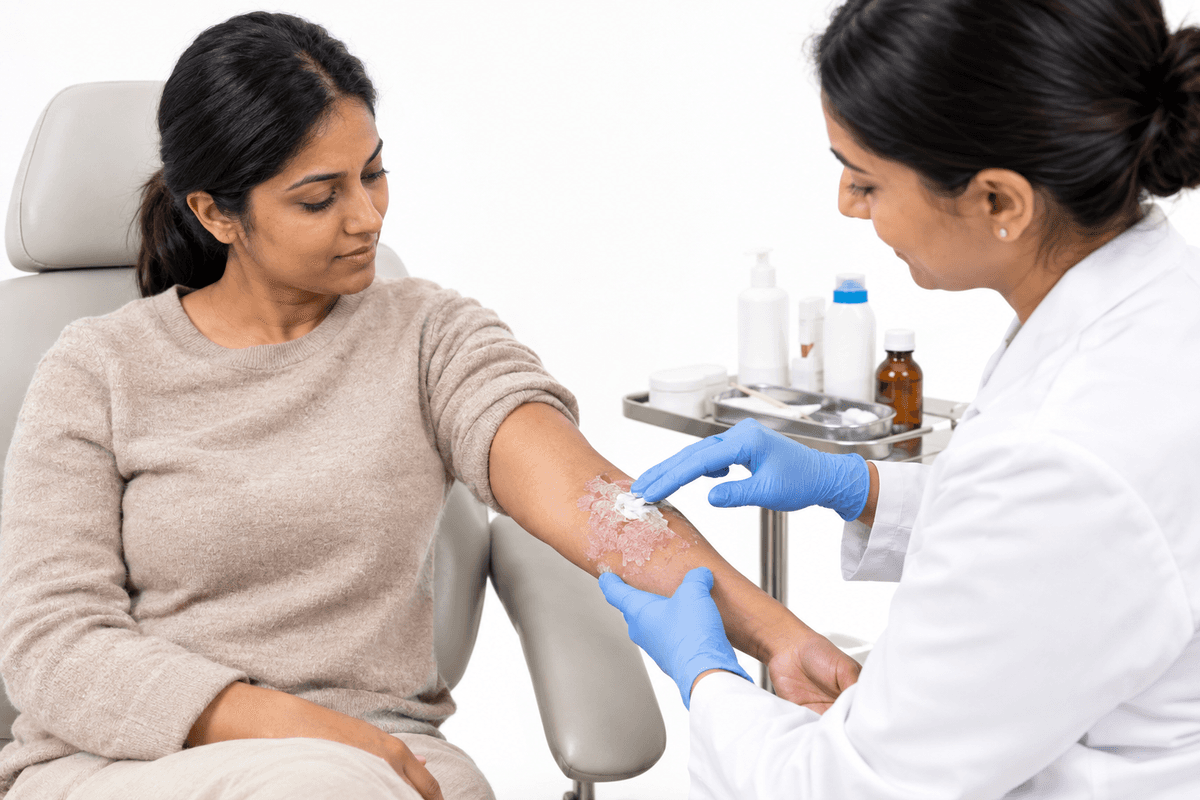
Performed by Dr. Ramanjanyalu at Dr Rams Skin Remediez
Psoriasis treatment aims to slow the rapid growth of skin cells, reduce inflammation, and manage symptoms like scaling and itching. Treatment options range from topical creams and ointments to light therapy and systemic medications, tailored to the severity and type of psoriasis. Dr. Ramanjanyalu works with patients to develop an individualised treatment plan based on their specific presentation and needs.
We believe in honest, upfront disclosure so you can make an informed decision.
A step-by-step look at what happens during this procedure.
The dermatologist examines the skin to identify the type and extent of psoriasis, reviews medical history, and discusses symptoms and triggers.
Based on severity, a treatment plan is developed, which may include topical medications for mild cases, phototherapy for moderate involvement, or systemic treatments for widespread or severe psoriasis.
Creams, ointments, or lotions containing corticosteroids, vitamin D analogues, or other active ingredients are applied directly to affected areas to reduce inflammation and slow skin cell turnover.
Controlled exposure to ultraviolet light, either UVB or PUVA, is administered in a clinical setting to slow skin cell growth and reduce inflammation.
For moderate to severe psoriasis, oral medications or injectable biologics that work throughout the body may be prescribed to target the immune system and reduce widespread inflammation.
A structured, patient-first approach from first consultation to full recovery.
Dr Rams Skin Remediez conducts a thorough examination to assess the severity, distribution, and type of psoriasis, along with any nail or joint involvement.
Treatment options are discussed based on the individual's condition, lifestyle, and preferences, with clear explanations of what each approach involves.
Follow-up appointments are scheduled to track response to treatment, adjust medications as needed, and monitor for any side effects or complications.
Patients receive guidance on trigger management, proper application of topicals, skin care routines, and when to seek additional medical attention.
What to expect at each stage of your recovery journey.
Some treatments may cause initial dryness or mild irritation as the skin adjusts. Application techniques and moisturising routines are important during this period.
Over weeks to months, many patients notice reduced scaling, redness, and thickness of plaques. Response varies depending on the severity of psoriasis and the treatment used.
Psoriasis is a chronic condition requiring ongoing management. Long-term treatment plans help maintain improvement and prevent flare-ups, with adjustments made as needed.
Treatment aims to reduce the visible signs of psoriasis, including scaling, redness, and plaque thickness, and to relieve itching and discomfort.
While treatment can lead to periods of clear or nearly clear skin, psoriasis is a lifelong condition and flare-ups may still occur, requiring ongoing care.
Many patients experience less self-consciousness and physical discomfort with effective management, though the degree of improvement varies individually.
Not all patients respond equally to the same treatment, and some may need to try multiple approaches before finding one that works well. Complete and permanent clearance is not always achievable.
The right choice depends on your diagnosis, risks and circumstances — discussed with you at your consultation.
For very mild psoriasis, moisturisers, gentle skin care, stress management, and avoiding known triggers may be sufficient. This approach is often tried first or used alongside medical treatments.
Over-the-counter preparations can help with scaling and mild inflammation. These may be considered for limited involvement or when prescription options are not suitable.
Some patients explore dietary changes, supplements, or stress-reduction techniques alongside medical treatment. These should be discussed with the treating doctor to ensure they do not interfere with prescribed therapies.
Let's clear up some of the most common myths about psoriasis treatment.
Get a personalised assessment from an experienced specialist. Understand your options, ask your questions, and decide with confidence.