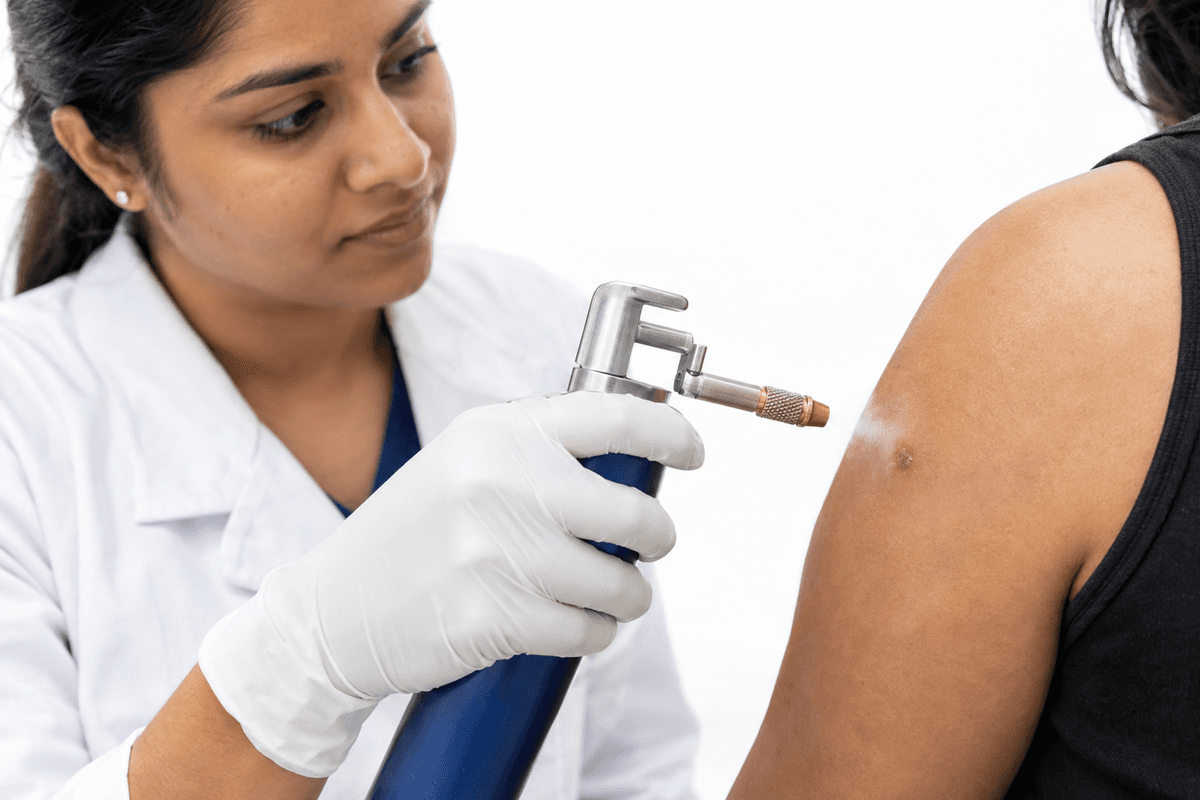
Performed by Dr. Ramanjanyalu at Dr Rams Skin Remediez
Cryotherapy is a dermatological procedure that uses extreme cold, typically liquid nitrogen, to freeze and destroy abnormal skin cells or unwanted tissue. The controlled freezing causes the targeted cells to break down, allowing healthy skin to regenerate. Dr Ramanjanyalu at Dr Rams Skin Remediez uses cryotherapy to address a range of skin concerns, from common warts to benign lesions.
We believe in honest, upfront disclosure so you can make an informed decision.
A step-by-step look at what happens during this procedure.
Liquid nitrogen is applied directly to the lesion using a spray device or cotton-tipped applicator. The extreme cold temperature typically reaches minus 196 degrees Celsius.
The targeted tissue freezes rapidly. Ice crystals form inside the cells, and the blood supply to the area is disrupted. You may feel a cold, stinging sensation during this phase.
The frozen tissue is allowed to thaw naturally. Sometimes a second freeze-thaw cycle is applied immediately for deeper or more stubborn lesions.
The freeze-thaw cycle causes cell membranes to rupture and abnormal cells to die. Over the following days, your immune system begins to clear away the damaged tissue.
A blister often forms within hours to days. As it heals, a scab develops and eventually falls off, revealing new skin underneath. Complete healing typically takes one to three weeks.
A structured, patient-first approach from first consultation to full recovery.
Dr Ramanjanyalu examines the lesion to confirm it is suitable for cryotherapy and to rule out any concerns that require biopsy or alternative treatment.
The freezing duration and technique are tailored to the size, depth, and type of lesion to balance effectiveness with minimising damage to surrounding healthy skin.
You receive clear wound care instructions, including how to clean the area, when to expect blistering, and signs that would require a follow-up call.
If the lesion is large or if multiple treatments are needed, a follow-up visit is scheduled to assess healing and determine whether additional cryotherapy is required.
What to expect at each stage of your recovery journey.
The treated area may be red, swollen, and tender. A blister typically forms within the first day or two. Keep the area clean and dry, and avoid picking at the blister. Your dermatologist may advise applying a simple protective dressing.
As the blister dries, a scab or crust will form. This is a normal part of healing. Continue gentle cleansing and avoid activities that could knock off the scab prematurely. Pain usually subsides after the first few days.
Once the scab falls off naturally, new pink skin will be visible. This skin may be lighter or darker than surrounding tissue initially. Protect the area from sun exposure and follow any specific skin care advice from your dermatologist.
Many benign lesions, warts, and keratoses can be effectively destroyed with one or more cryotherapy sessions. However, some lesions may require repeat treatments, and not all growths respond equally.
While the lesion itself is removed, the treated area may heal with a slightly different texture or colour compared to surrounding skin. In some cases, lighter patches or minor scarring may persist.
Cryotherapy destroys visible abnormal tissue, but it does not prevent new lesions from forming elsewhere or the same lesion from returning if not all abnormal cells were eliminated.
Cryotherapy is not appropriate for suspicious lesions that require biopsy, deeply invasive growths, or areas where scarring would be particularly problematic. Alternative methods may be safer or more effective depending on your diagnosis.
The right choice depends on your diagnosis, risks and circumstances — discussed with you at your consultation.
Cutting out the lesion under local anaesthesia allows for complete removal and tissue examination. This may be preferred when a biopsy is needed or when the lesion is deep or located in a sensitive area.
These methods use heat or focused light to destroy abnormal tissue. They may offer more precise control in certain locations or for specific lesion types, though they also carry their own risks.
For some conditions like warts or actinic keratoses, prescription creams or solutions can be applied over weeks to months. This option avoids the discomfort of freezing but requires consistent application and may take longer to show results.
Let's clear up some of the most common myths about cryotherapy.
Get a personalised assessment from an experienced specialist. Understand your options, ask your questions, and decide with confidence.