Treated by Dr. Ramanjanyalu at Dr Rams Skin Remediez
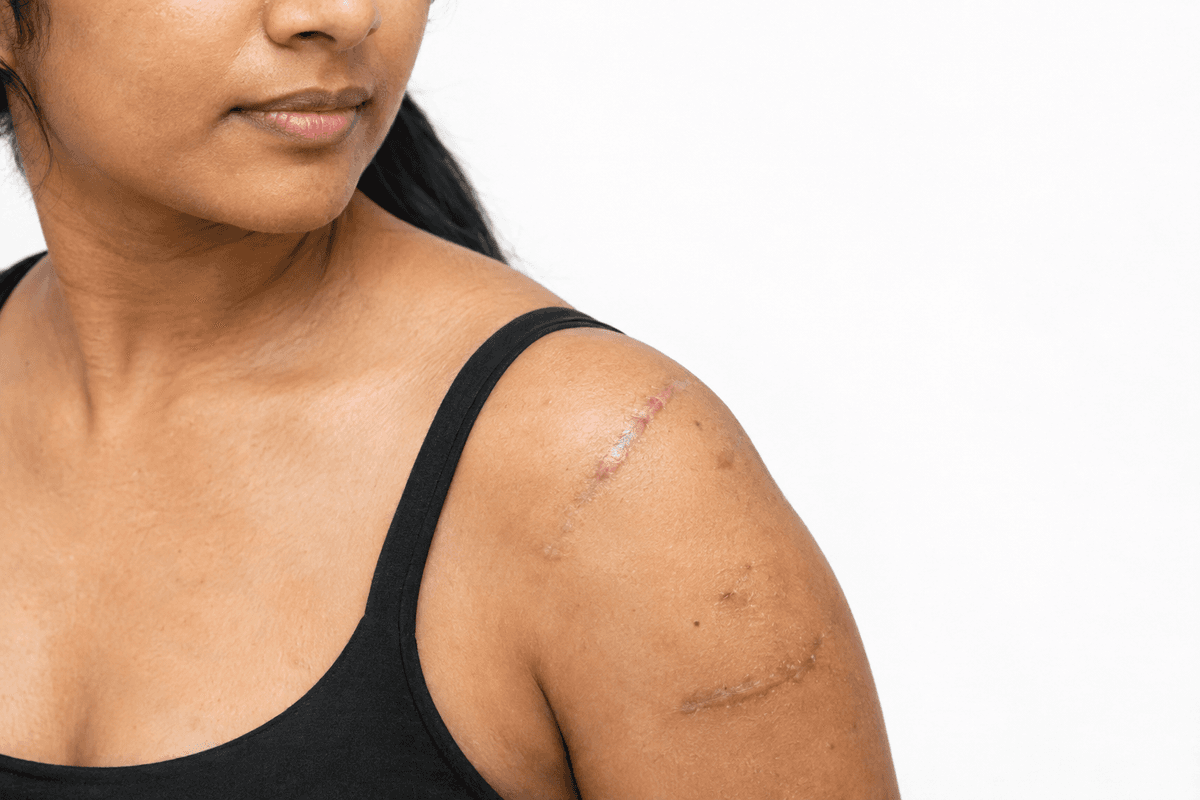
Scars and marks in Bengaluru affect individuals of all ages, resulting from injuries, surgeries, acne, or skin conditions that disrupt normal healing processes. These visible skin changes can impact self-confidence and quality of life, ranging from minor discolorations to raised or depressed tissue formations. At Dr Rams Skin Remediez, Dr Ramanjanyalu provides comprehensive dermatological assessment and advanced treatment options tailored to each patient's specific scar type and skin condition.
Depressed scars that sit below the surrounding skin surface, commonly resulting from acne, chickenpox, or surgical procedures. These scars develop when insufficient collagen is produced during the healing process, creating pitted or sunken appearances including ice pick, boxcar, and rolling scar patterns.
Raised scars that remain within the boundaries of the original wound, appearing thick, red, and elevated above the skin surface. These develop due to excessive collagen production during healing and typically improve over time, though they may cause itching, discomfort, and cosmetic concerns.
Aggressive raised scars that grow beyond the original wound boundaries, forming thick, irregular tissue that continues expanding over months or years. More common in darker skin types, keloids result from abnormal wound healing with excessive collagen deposition and may cause pain, tenderness, and significant aesthetic distress.
Multiple factors can contribute to the development and progression of this condition.
Scars and Marks develops gradually. Recognising symptoms early gives you more treatment options.
From conservative to surgical — we always start with the least invasive option first.
A structured, patient-first approach from first visit to full recovery.
Dr Ramanjanyalu conducts detailed evaluation of scar type, age, location, and patient skin characteristics using clinical examination and advanced imaging. This assessment identifies the underlying scar mechanism, determines optimal treatment strategies, and establishes realistic expectations for improvement based on individual factors.
Our dermatology team designs customized multi-modal treatment protocols combining topical agents, laser therapy, injectables, and surgical options as appropriate. Treatment plans consider scar severity, patient goals, skin type, lifestyle factors, and budget to ensure optimal outcomes with minimal disruption to daily activities.
Dr Rams Skin Remediez utilizes state-of-the-art laser systems, pharmaceutical-grade products, and precise injection techniques delivered in a comfortable clinical environment. Each treatment session is carefully executed with attention to safety, efficacy, and patient comfort, following evidence-based protocols that maximize scar improvement while minimizing side effects.
Regular follow-up appointments track treatment response, adjust protocols as needed, and provide supportive care throughout the healing process. Our team educates patients on proper wound care, sun protection, and maintenance strategies to sustain results and prevent new scar formation from future injuries or procedures.
What to expect at each phase of recovery.
Following treatment, patients may experience mild redness, swelling, or sensitivity lasting 1-7 days depending on the procedure intensity. Topical treatments require only routine application, while laser and injectable procedures need gentle cleansing, prescribed ointments, and sun protection. Most patients resume normal activities within 24-48 hours with appropriate care.
Over 2-8 weeks, treated scars undergo active remodeling with gradual improvement in texture, color, and elevation. Patients follow prescribed skincare regimens, avoid sun exposure, and may undergo additional treatment sessions as scheduled. This phase requires patience as collagen remodeling occurs progressively with cumulative improvements becoming more apparent.
After completing the primary treatment series, patients enter maintenance phase focusing on preserving results and preventing new scar formation. This includes continued use of medical-grade skincare products, diligent sun protection, periodic touch-up treatments, and prompt management of any new injuries or skin conditions to maintain optimal aesthetic outcomes.
Most patients experience 50-80% improvement in scar texture, with raised scars becoming flatter and depressed scars becoming less noticeable through collagen remodeling and tissue regeneration. Results vary based on scar type, treatment modality, and individual healing responses, with optimal outcomes achieved through multiple treatment sessions.
Treatment protocols effectively reduce hyperpigmentation and redness associated with scars, creating better color matching with surrounding skin. Laser therapy and topical agents normalize melanin distribution and reduce vascular components, resulting in scars that blend more naturally with the patient's overall complexion.
Comprehensive treatment addresses both functional limitations from contracture scars and cosmetic concerns affecting self-confidence. Patients report increased satisfaction with their appearance, reduced self-consciousness in social situations, and improved quality of life following successful scar revision therapy.
When combined with proper maintenance and sun protection, scar treatments provide durable improvements that can last for years. While scars cannot be completely eliminated, professional dermatological care achieves substantial reduction in visibility, allowing patients to feel more confident and comfortable in their skin long-term.
Untreated scars often persist indefinitely and may worsen over time, particularly keloids which can continue expanding beyond original wound boundaries. Severe scarring can cause functional limitations, chronic itching, pain, and psychological distress affecting self-esteem and quality of life. Early intervention typically produces better outcomes than treating mature, established scars.
Consult a dermatologist if you develop raised, thickened, or expanding scars, particularly if they cause discomfort, restrict movement, or significantly impact your appearance and confidence. Seek evaluation within the first few months of wound healing for optimal treatment outcomes, as early intervention prevents problematic scar formation. Dr Ramanjanyalu at Dr Rams Skin Remediez provides expert assessment and evidence-based treatments for all scar types.
Early treatment means more options and better outcomes. Book a consultation to understand your condition and explore the right path forward.