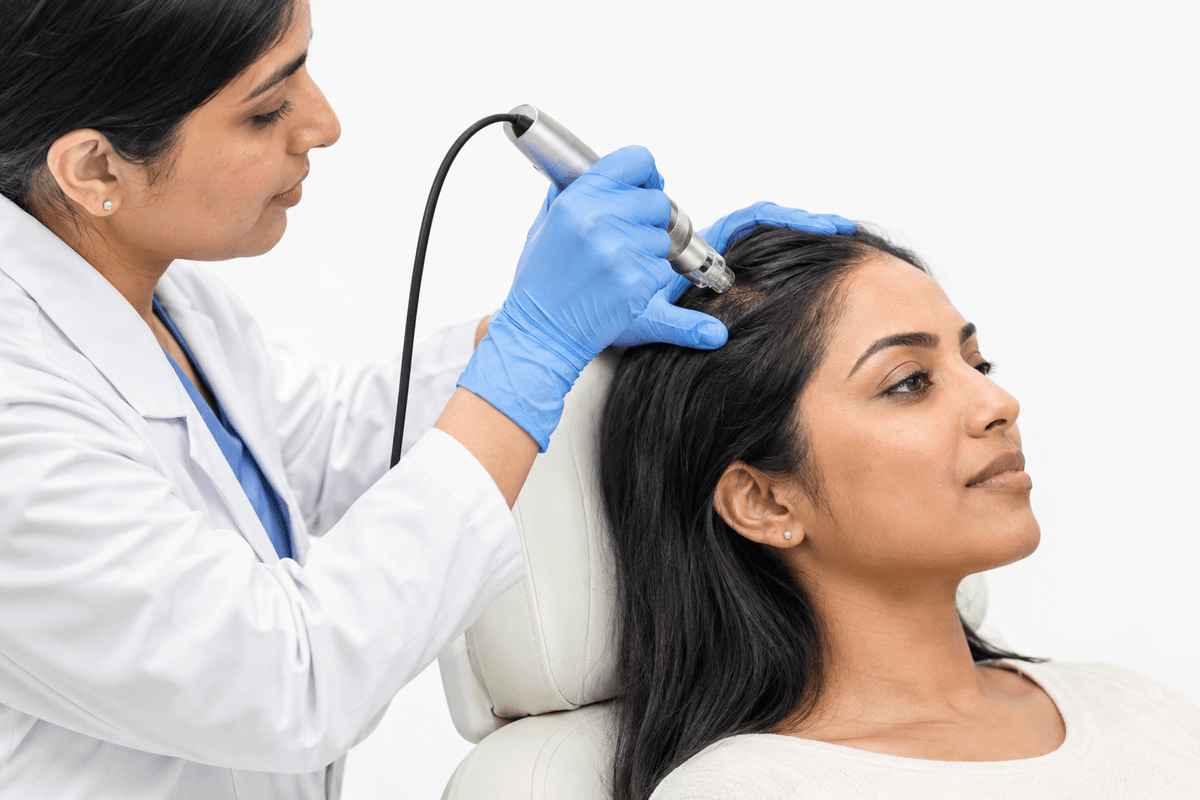
Performed by Dr. Ramanjanyalu at Dr Rams Skin Remediez
Hair loss treatment aims to slow down hair shedding, encourage regrowth, and improve scalp health. The approach depends on what is causing the hair loss—hormonal changes, nutritional deficiencies, scalp conditions, or other factors. Dr Rams Skin Remediez offers medical and procedural options based on individual assessment.
We believe in honest, upfront disclosure so you can make an informed decision.
A step-by-step look at what happens during this procedure.
The dermatologist examines the scalp, reviews your medical history, and may order blood tests or a scalp biopsy to identify the cause of hair loss.
Based on the findings, a plan is created. This may include topical solutions, oral medications, nutritional supplements, or procedural interventions such as mesotherapy or platelet-rich plasma therapy.
For procedural treatments, the scalp is cleaned and a topical numbing agent is applied. Injections are then delivered into the scalp at multiple points to stimulate hair follicles.
You are given instructions on scalp care, including what to avoid and how to use prescribed medications at home.
Hair growth is a gradual process. Follow-up visits help track progress, adjust treatment, and schedule additional sessions if needed.
A structured, patient-first approach from first consultation to full recovery.
We examine the pattern and extent of hair loss, check for scalp conditions, and review your medical and family history to understand the root cause.
Treatment is tailored to your diagnosis. We combine medical therapies with procedural options when appropriate, ensuring the plan fits your needs and lifestyle.
For in-clinic procedures, we use topical anaesthesia to minimise discomfort. The session is performed in a clean, controlled environment with attention to sterile technique.
We provide clear instructions for home care, schedule regular follow-ups to monitor response, and adjust the plan as your hair and scalp respond to treatment.
What to expect at each stage of your recovery journey.
You may notice mild redness or tenderness on the scalp for a day or two. Most people return to normal activities the same day. Avoid washing your hair for the first 24 hours if advised.
Continue prescribed medications and follow scalp care instructions. You may experience some initial shedding as the treatment cycle begins. This is often temporary.
Hair regrowth is gradual and varies by individual. Maintenance sessions or continued medication may be recommended to sustain results. Your dermatologist will guide the schedule based on your response.
Treatment can help reduce the rate of shedding and stabilise further thinning in many cases, though response depends on the cause and stage of hair loss.
Some people see an increase in the number of actively growing hairs and improved thickness over several months. Not everyone will regain a full head of hair.
Addressing underlying scalp conditions such as inflammation or infection can create a healthier environment for hair growth.
Hair loss treatment does not work equally for everyone. Advanced or prolonged hair loss with inactive follicles may not respond. Results are not permanent without ongoing care, and some patterns of hair loss may require surgical options.
The right choice depends on your diagnosis, risks and circumstances — discussed with you at your consultation.
An over-the-counter lotion or foam applied to the scalp daily. It may help with certain types of hair loss and is often the first step before procedural treatments.
A prescription medication for androgenetic alopecia in men. It is not suitable for everyone and requires regular monitoring. Not used in women of childbearing age.
A surgical option for advanced hair loss where follicles are moved from one area of the scalp to another. Considered when medical and non-surgical treatments have not achieved desired results.
Let's clear up some of the most common myths about hair loss treatment.
Get a personalised assessment from an experienced specialist. Understand your options, ask your questions, and decide with confidence.