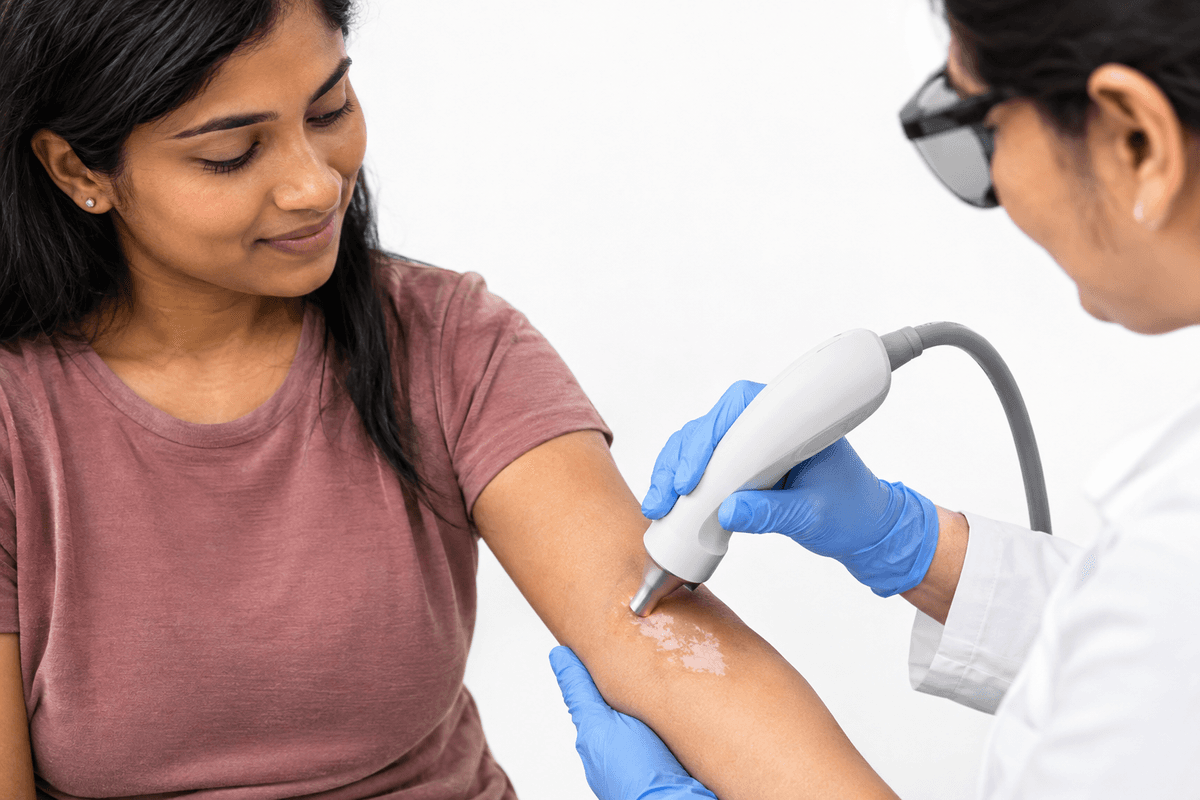
Performed by Dr. Ramanjanyalu at Dr Rams Skin Remediez
Vitiligo treatment aims to help manage the appearance of white patches on the skin caused by loss of melanin-producing cells. Treatment approaches may include topical medications, phototherapy, and procedural options depending on the extent, location, and activity of the condition. Dr Ramanjanyalu assesses each patient individually to determine which approach may be suitable for their specific circumstances.
We believe in honest, upfront disclosure so you can make an informed decision.
A step-by-step look at what happens during this procedure.
The dermatologist examines the patches under natural and specialised light to assess the type, extent, and activity of vitiligo. Medical history and any previous treatments are reviewed to guide the treatment plan.
Based on patch characteristics, treatment may include topical corticosteroids or immunomodulators, narrowband ultraviolet B phototherapy, excimer laser, or surgical methods such as melanocyte transplantation for stable patches.
Medical treatments are applied to affected areas, or light-based therapies are delivered in controlled doses. Surgical procedures involve transferring healthy pigment cells from unaffected skin to depigmented patches.
Repigmentation typically begins gradually over weeks to months. The clinical team monitors progress and adjusts the approach if patches do not respond or if side effects develop.
Ongoing treatment sessions or maintenance therapy may be needed to sustain results. Follow-up visits track any new patches or changes, and sun protection is emphasised to prevent darkening of unaffected skin.
A structured, patient-first approach from first consultation to full recovery.
Dr Rams Skin Remediez conducts a detailed skin examination to map affected areas and identify whether vitiligo is stable or actively spreading, helping determine which treatment modalities may be suitable.
Treatment options are explained, including the expected timeline, session frequency, and realistic expectations. The plan is adjusted based on skin type, patch location, and patient preferences.
Therapies are performed in a controlled setting with appropriate dosing and equipment. For procedural options, sterile techniques and comfort measures are used throughout.
Regular follow-up visits track repigmentation progress and any adverse effects. The treatment approach is modified if needed, and guidance on skincare and sun protection is reinforced.
What to expect at each stage of your recovery journey.
After light-based or procedural treatments, the skin may appear pink or swollen for a few hours to days. Avoiding direct sun exposure and following wound care instructions where applicable is important during this time.
Over the first few weeks, any redness or crusting from procedural methods resolves. Topical medications or moisturisers are continued as directed, and gentle skincare is emphasised.
Repigmentation develops gradually and may take several months to become visible. Continued treatment sessions, sun protection, and regular follow-up support sustained improvement and monitor for any new patches.
Treatment may help restore some colour to depigmented patches, though the degree of repigmentation varies widely between individuals and body areas. Face and trunk often respond better than hands and feet.
Not all patches repigment fully, and colour may return in a speckled or patchy manner. Some areas may remain white despite treatment, and new patches can develop even during or after therapy.
Treatment may help slow or halt the progression of active vitiligo in some cases, reducing the appearance of new patches. However, vitiligo is unpredictable, and stabilisation is not guaranteed.
Many people find that even partial improvement helps with self-esteem and reduces the visibility of patches. Expectations should be discussed carefully, as complete restoration of original skin tone is uncommon.
The right choice depends on your diagnosis, risks and circumstances — discussed with you at your consultation.
Specialised makeup and skin dyes can temporarily cover depigmented patches without medical intervention. This may be chosen by those who prefer a non-medical approach or have patches that do not respond to treatment.
For extensive vitiligo affecting most of the body, bleaching the remaining pigmented skin to match white patches may be considered. This is irreversible and typically reserved for specific circumstances discussed with the dermatologist.
Some people choose to monitor vitiligo without medical intervention, especially if patches are stable, not bothersome, or in areas easily covered by clothing. The decision depends on individual preferences and quality of life considerations.
Let's clear up some of the most common myths about vitiligo treatment.
Get a personalised assessment from an experienced specialist. Understand your options, ask your questions, and decide with confidence.