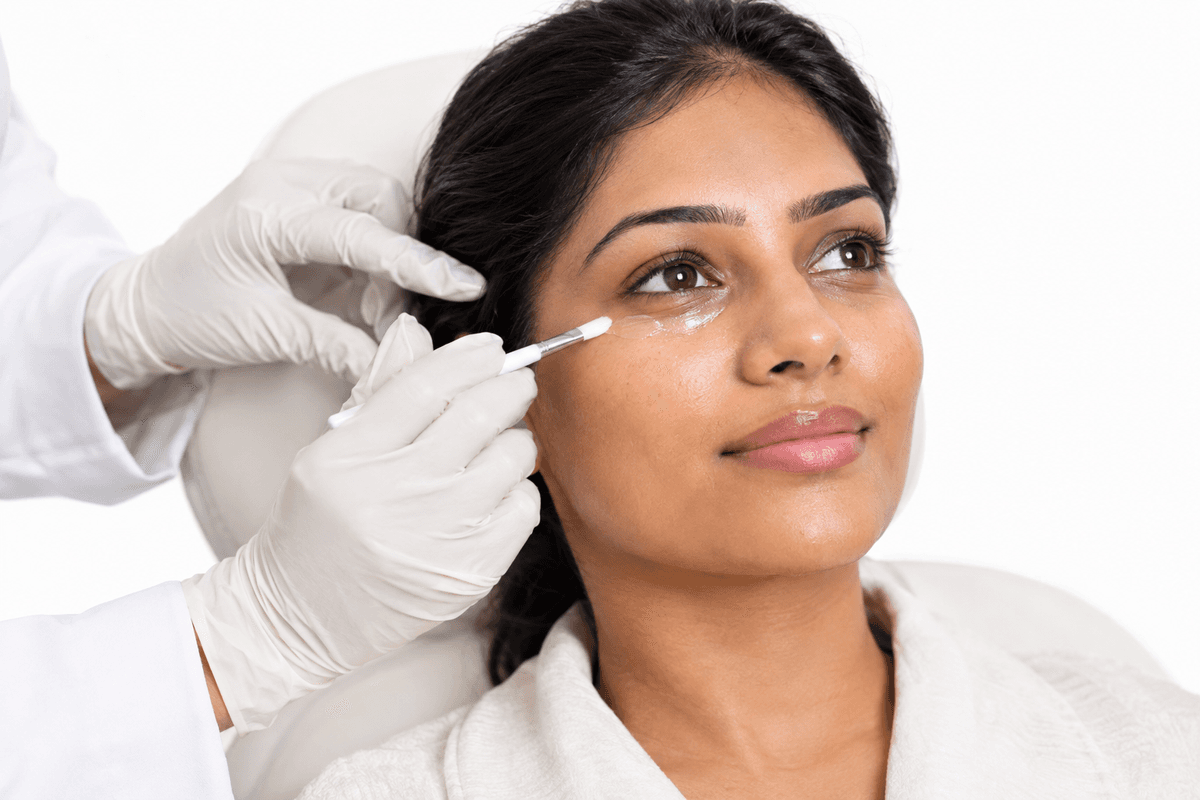
Performed by Dr. Ramanjanyalu at Dr Rams Skin Remediez
Dark circles treatment aims to reduce the appearance of under-eye discoloration and hollowing. The approach depends on the underlying cause—pigmentation, blood vessel visibility, volume loss or skin texture. Dr. Ramanjanyalu evaluates each case to determine whether topical agents, chemical peels, laser therapy, injectable fillers or combination methods are appropriate.
We believe in honest, upfront disclosure so you can make an informed decision.
A step-by-step look at what happens during this procedure.
The dermatologist examines the under-eye area, evaluates skin thickness, pigmentation pattern and vascular visibility, and discusses your medical history and goals.
Depending on the cause, options may include topical depigmenting agents, chemical peels for pigmentation, laser therapy to target blood vessels or melanin, or dermal fillers to restore lost volume.
For topical or peel treatments, the agent is carefully applied to the under-eye skin. For laser therapy, controlled light pulses are delivered. For fillers, small amounts of hyaluronic acid are injected beneath the skin to lift shadowed areas.
You receive guidance on cleansing, sun protection and activity restrictions. Follow-up timing is discussed based on the method used.
Repeat sessions may be needed over weeks or months. Long-term maintenance with sun protection and topical care is often recommended to sustain improvement.
A structured, patient-first approach from first consultation to full recovery.
Dr Rams Skin Remediez conducts a thorough evaluation to identify whether pigmentation, vascular issues, volume loss or a combination is responsible for your dark circles.
A tailored approach is selected—topical therapy, chemical peels, laser or filler—based on your skin type, the specific cause and your expectations.
The under-eye area is treated with care, using appropriate anaesthesia and precise delivery. Adjustments are made during follow-up visits to optimise results.
You receive clear aftercare instructions, guidance on sun protection and a schedule for any repeat sessions or long-term skincare to maintain improvement.
What to expect at each stage of your recovery journey.
Mild swelling, redness or bruising may occur. Apply cold compresses as advised and avoid touching or rubbing the treated area. Most daily activities can resume immediately, though strenuous exercise may be restricted briefly.
Visible bruising or peeling fades. Keep the area clean, moisturised and protected from sun exposure. Avoid makeup over treated skin until cleared by your dermatologist.
Gradual lightening of pigmentation or filling of hollows becomes apparent. Attend follow-up visits as scheduled. Individual timelines vary, and your dermatologist's instructions take priority over general guidance.
Chemical peels, laser therapy or topical agents may lighten dark circles caused by excess melanin. Complete removal is not always possible, especially with hereditary pigmentation.
Injectable fillers can restore volume beneath the eyes, reducing the shadowing that contributes to a tired appearance. Results are temporary and require maintenance.
Laser or light-based treatments may reduce the visibility of blood vessels under thin skin. The degree of improvement varies, and some vascular prominence may remain.
Dark circles are often multifactorial and influenced by genetics, lifestyle and ageing. Treatment can improve appearance but may not eliminate the concern entirely. Ongoing skincare and sun protection are essential.
The right choice depends on your diagnosis, risks and circumstances — discussed with you at your consultation.
Consistent use of broad-spectrum sunscreen, antioxidants, retinoids and vitamin C serums may lighten mild pigmentation over time. This is often tried before procedural intervention.
Adequate sleep, hydration, reduced salt intake and management of allergies can diminish under-eye puffiness and discoloration. These measures may be sufficient for mild cases.
Colour-correcting concealers and makeup can effectively mask dark circles without medical intervention. This is a non-invasive option when treatment is not desired or indicated.
Let's clear up some of the most common myths about dark circles treatment.
Get a personalised assessment from an experienced specialist. Understand your options, ask your questions, and decide with confidence.