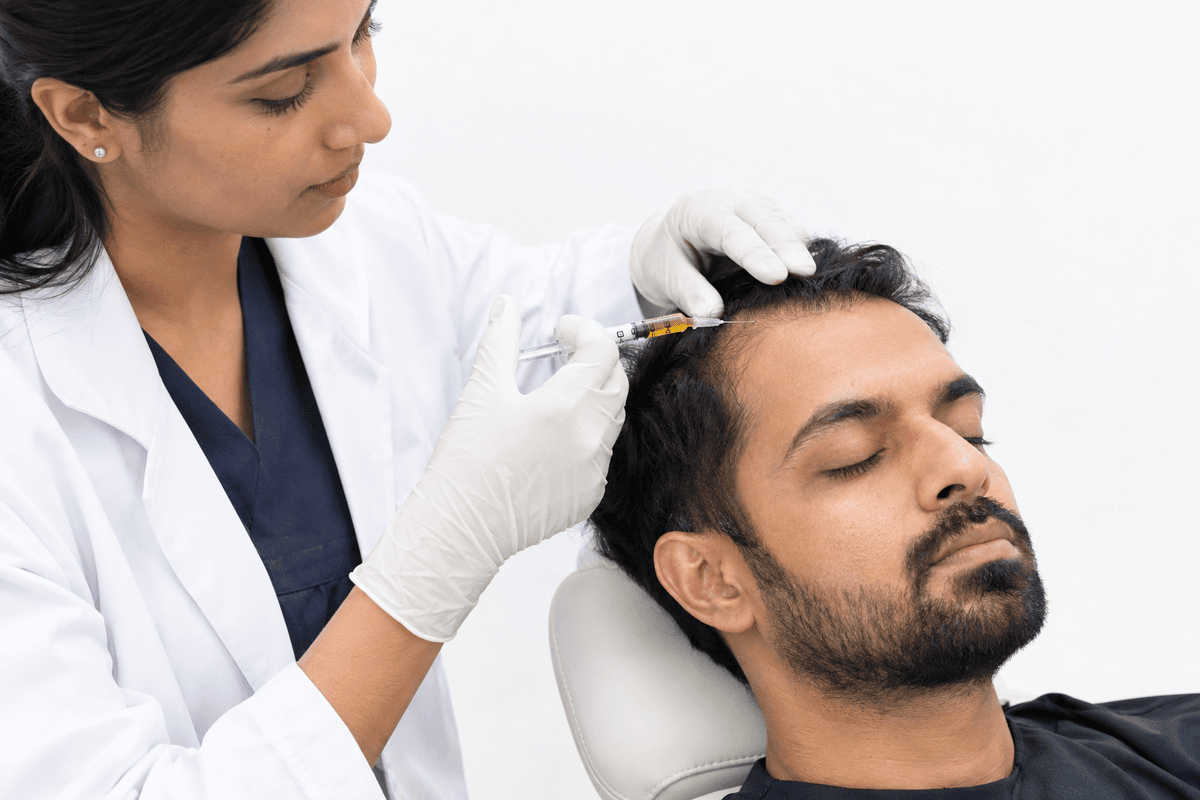
Performed by Dr. Ramanjanyalu at Dr Rams Skin Remediez
PRP Hair Transplantation is a procedure that combines traditional hair grafting with platelet-rich plasma (PRP) therapy. Hair follicles are transplanted from donor areas to balding or thinning regions, and PRP—concentrated from the patient's own blood—is applied to the scalp to support healing and follicle survival. Dr Ramanjanyalu, a dermatologist at Dr Rams Skin Remediez in Kasturi Nagar, Bengaluru, performs this procedure for patients with pattern hair loss or thinning.
We believe in honest, upfront disclosure so you can make an informed decision.
A step-by-step look at what happens during this procedure.
A small sample of your blood is drawn and placed in a centrifuge to separate and concentrate the platelets, creating platelet-rich plasma.
The back or sides of the scalp, where hair is thicker, are numbed with local anaesthesia. Hair follicles are then harvested either as a strip of tissue or as individual grafts.
The harvested follicles are carefully examined and prepared under magnification, separating them into individual or small groups of follicles.
Tiny incisions or channels are made in the balding or thinning areas of the scalp where the grafts will be placed.
The prepared grafts are placed into the incisions one by one. PRP is then injected into the scalp or applied topically to the transplant sites to support healing and follicle health.
A structured, patient-first approach from first consultation to full recovery.
Dr Rams Skin Remediez begins with a detailed scalp examination and discussion of your hair loss pattern, medical history, and expectations to determine if the procedure is appropriate.
The procedure is performed in a controlled environment with attention to sterile instrument handling and infection prevention protocols.
The placement of grafts is planned to match natural hair growth patterns and density, considering the hairline and overall aesthetic goals.
You receive written instructions on wound care, activity restrictions, and follow-up appointments to monitor healing and graft survival.
What to expect at each stage of your recovery journey.
The first week involves keeping the scalp clean and protected, avoiding strenuous activity, and following wound care instructions. Swelling and mild discomfort are common. Timelines vary by individual.
Over the next few weeks, scabs fall off and transplanted hairs shed. The scalp may feel numb or tight. Gentle shampooing is usually resumed after a few days. Individual instructions take priority.
New hair begins to grow from the transplanted follicles after several months. Growth is gradual, and final density is typically assessed around one year. Results vary among individuals.
The procedure aims to restore hair in areas of thinning or baldness by transplanting functioning follicles. Not all grafts may survive, and density varies by individual factors.
When grafts are placed to match natural growth patterns, the result can appear consistent with your existing hair. The final appearance depends on graft survival, donor hair quality, and healing.
The procedure transplants existing follicles but does not prevent ongoing hair loss in untreated areas. Additional sessions or medical treatments may be needed over time.
Not all transplanted follicles will grow successfully. Factors such as blood supply, healing response, and technique influence the final density achieved.
The right choice depends on your diagnosis, risks and circumstances — discussed with you at your consultation.
Medications such as minoxidil or finasteride may slow hair loss or promote regrowth in some individuals. These are considered when surgery is not suitable or desired, though results vary and ongoing use is required.
Platelet-rich plasma injections without transplantation may be used for early thinning or to support existing hair. This option is less invasive but does not add new follicles. Choice depends on the extent of hair loss and individual response.
Tattooing techniques create the appearance of hair density without transplanting follicles. This is sometimes considered for those who cannot undergo surgery or prefer a non-surgical cosmetic option.
Let's clear up some of the most common myths about prp hair transplantation.
Get a personalised assessment from an experienced specialist. Understand your options, ask your questions, and decide with confidence.