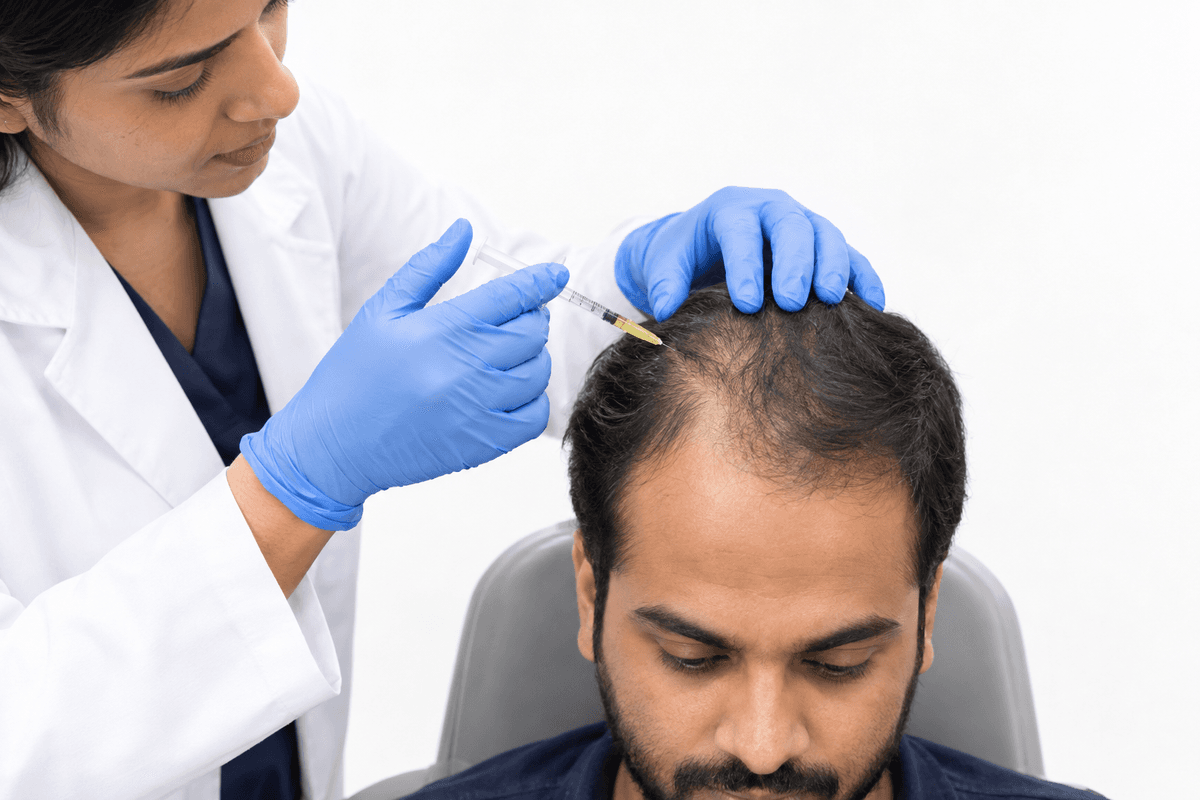
Performed by Dr. Ramanjanyalu at Dr Rams Skin Remediez
Baldness treatment addresses hair loss through various approaches depending on the type and extent of hair thinning. Options range from topical medications and oral therapies to platelet-rich plasma (PRP) injections and surgical hair restoration. Dr Ramanjanyalu evaluates each patient's hair loss pattern, underlying causes, and medical history to recommend an appropriate treatment plan.
We believe in honest, upfront disclosure so you can make an informed decision.
A step-by-step look at what happens during this procedure.
The dermatologist examines the scalp, assesses hair density and distribution, and discusses the pattern and duration of hair loss. Medical history, family history of baldness, and any underlying conditions are reviewed.
Hair loss can result from genetic factors, hormonal changes, nutritional deficiencies, stress, or scalp conditions. Blood tests or scalp examination may be performed to identify contributing factors.
Based on the diagnosis, the dermatologist recommends appropriate treatment. Options include topical minoxidil, oral medications like finasteride, PRP therapy, mesotherapy, low-level laser therapy, or hair transplant surgery.
For medical therapy, medications are prescribed for daily use. For PRP, blood is drawn, processed to concentrate platelets, and injected into the scalp. Hair transplant involves harvesting hair follicles from donor areas and implanting them in thinning zones.
Most baldness treatments require ongoing maintenance. Follow-up visits monitor response, adjust medications if needed, and schedule repeat sessions for procedures like PRP. Results typically emerge gradually over several months.
A structured, patient-first approach from first consultation to full recovery.
Dr Rams Skin Remediez conducts a detailed scalp and hair evaluation, including dermoscopy when indicated, to understand the type and severity of hair loss and identify any scalp conditions that need addressing.
Treatment recommendations are tailored to the individual's hair loss pattern, age, general health, and preferences. The dermatologist discusses the options, their expected timelines, and what each approach involves.
Procedures are performed with attention to comfort and safety. For injectable treatments, local anaesthesia or numbing agents are used. Sterile technique is maintained throughout all procedural interventions.
Regular follow-up appointments track progress, address any concerns, and adjust the treatment plan as needed. Patients receive guidance on scalp care, medication use, and lifestyle factors that may influence hair health.
What to expect at each stage of your recovery journey.
For medical treatments, no recovery period is needed. After PRP or mesotherapy, mild scalp tenderness or redness may last a day or two. Hair transplant patients may experience swelling and scabbing for several days. Individual instructions take priority.
Patients continue with prescribed treatments. Some approaches cause temporary shedding of existing hair before new growth begins. Avoiding strenuous activity and direct sun exposure may be advised initially after procedural treatments.
This is when results typically become visible. Hair density gradually improves, and new hair growth becomes apparent. Timelines vary widely depending on the treatment type and individual response. Patience and adherence to the treatment plan are important during this phase.
Many treatments aim to halt or slow the progression of hair thinning. This can preserve existing hair and prevent further baldness, though it may not restore all lost hair.
Some treatments stimulate dormant follicles or encourage new hair growth. The extent of regrowth varies; not all patients will achieve complete restoration of previous hair density.
Existing hair may become thicker and healthier with treatment, creating a fuller appearance even if the total number of hairs does not dramatically increase.
Baldness treatment cannot reverse all hair loss or create hair where follicles no longer exist. Results depend on the underlying cause, extent of loss, and individual biology. Some treatments require lifelong maintenance, and stopping treatment may lead to resumed hair loss.
The right choice depends on your diagnosis, risks and circumstances — discussed with you at your consultation.
For mild or early hair thinning, addressing nutritional deficiencies, managing stress, and avoiding harsh hair treatments may be sufficient. This approach is considered when hair loss is not severe or progressive.
Wigs, hair extensions, scalp micropigmentation, and cosmetic powders offer non-medical ways to conceal hair loss. These are options for those who prefer not to pursue medical or surgical treatment, or who are not suitable candidates.
Some individuals choose not to treat baldness, accepting it as a natural part of aging or their appearance. The choice depends on personal preferences, the impact on quality of life, and the risks and commitment of treatment.
Let's clear up some of the most common myths about baldness treatment.
Get a personalised assessment from an experienced specialist. Understand your options, ask your questions, and decide with confidence.